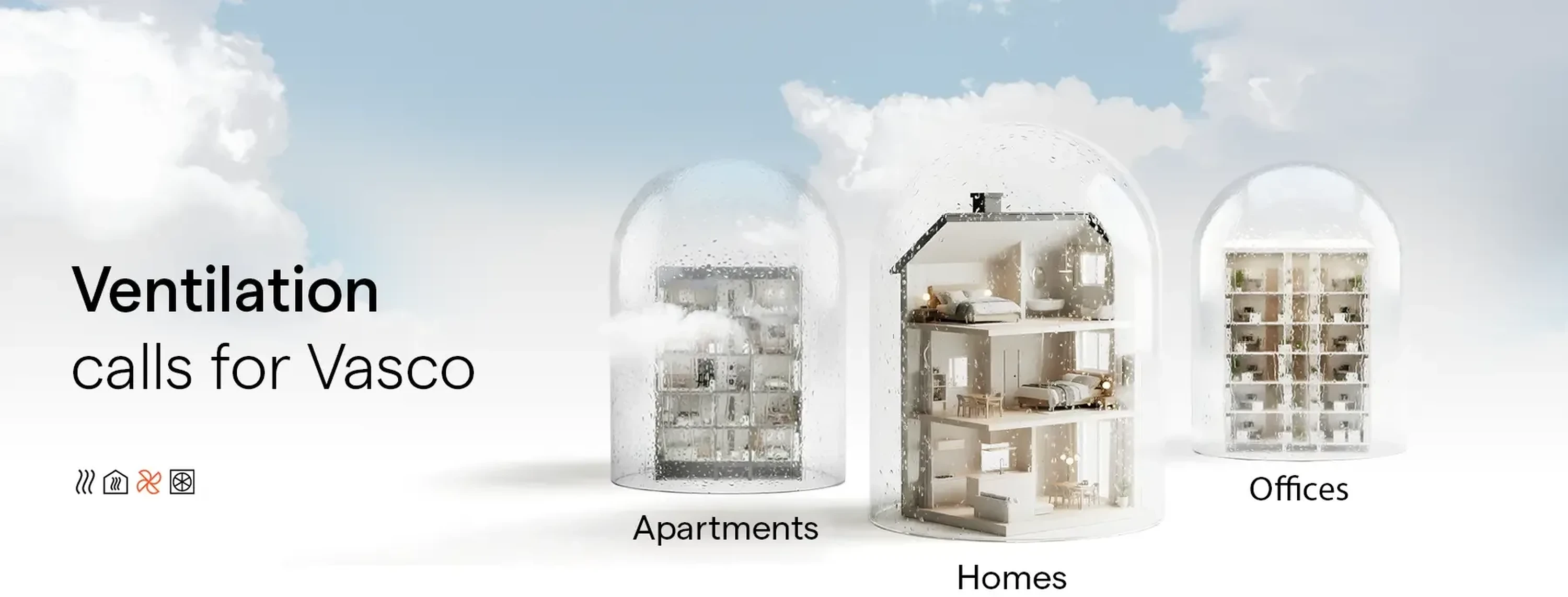
Don’t let your home live under a glass jar, let it breathe. With Vasco ventilation systems, you give your living spaces the fresh, healthy air they deserve, every single day. Good ventilation is essential for a clean, comfortable indoor climate in every room. Whether you need an efficient mechanical ventilation solution, a reliable air supply system, or powerful fans, our extensive range has everything you need to keep your home or workspace perfectly ventilated. By choosing high-quality ventilation, you’re not only protecting your health, you’re also boosting comfort and overall well-being for everyone inside. Discover the true power of fresh air!

Our mechanical ventilation systems, System C and System D, are the result of years of development. They work whisper-quietly, are energy-efficient, and keep the air quality in every room perfectly balanced. With or without heat recovery: you always enjoy fresh air without heat loss and without worries.
Our ventilation systems


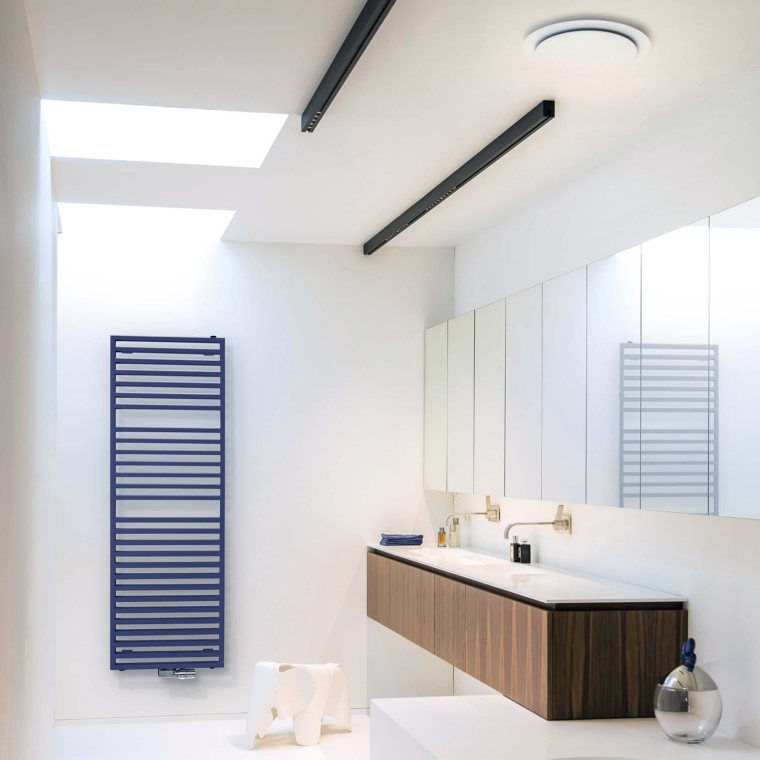
The benefits of good ventilation
A good ventilation system is essential for air quality in your home. Without adequate ventilation, moisture and harmful substances can accumulate, which can lead to mould formation, allergies, and poor air quality. Our ventilation systems are designed to tackle these problems effectively, so you can enjoy clean and fresh air in every room.
Besides fixed ventilation systems, we offer advanced ventilation systems with heat recovery that are perfect for efficient and continuous ventilation of any room. We have systems that can be used in both residential and commercial environments. They are quiet, energy-efficient, and easy to operate.
The benefits of:
Mechanical ventilation?
Mechanical ventilation ensures a controlled airflow in your home. This type of ventilation continuously removes polluted air and supplies fresh, clean air. The biggest advantage of this is that you are always assured of a healthy indoor climate, regardless of the outside temperature or the weather. Moreover, modern systems are energy-efficient and easy to use, contributing to both a lower energy bill and a more eco-friendly household.
Why choose our ventilation systems?
At Vasco, it is about more than just air renewal; we offer complete ventilation solutions that lift the indoor climate to a higher level. Our ventilation systems combine advanced technology with ease of use and durability. Whether you choose a system with heat recovery or another ventilation solution, you always benefit from top quality and reliable performance. Choose comfort, choose health, choose Vasco fans.

Reliable, energy-efficient, and quiet operation. That is how we ensure healthy indoor air every day, without compromise.
Veelgestelde vragen over ventilatie
Onze FAQ over ventilatie beantwoordt de meest gestelde vragen over systemen, onderhoud, regelgeving en gezond binnenklimaat. Handig voor wie praktische informatie zoekt over optimale luchtkwaliteit in huis of kantoor via mechanische ventilatie!
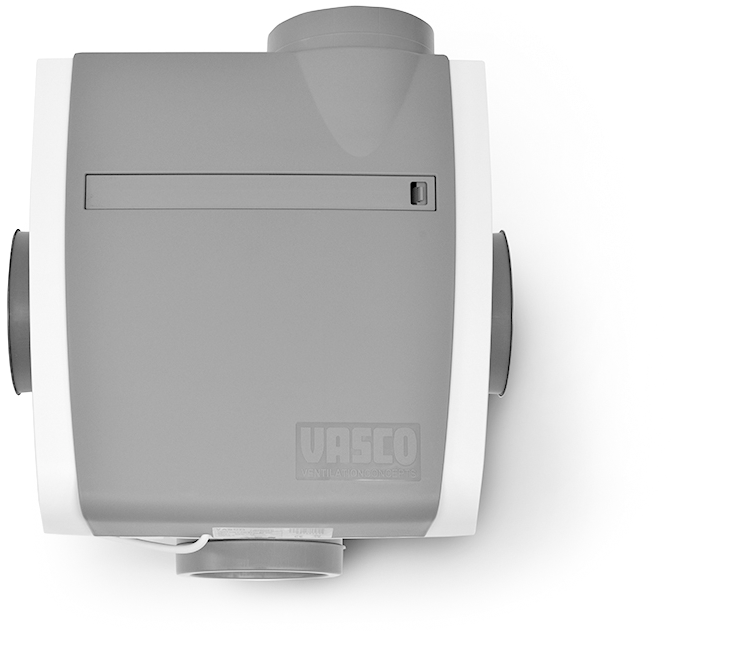
For communication between the RF switches and the 225 Compact ventilation unit, it is necessary that the antenna at the bottom of the 225 Compact ventilation unit is folded out and that these controls are paired with the 225 Compact ventilation unit. See the manual for the pairing procedure.
There are several possibilities available to control the 225 Compact ventilation unit.
Wireless: RF 3-position switch, RH RF switch, CO2 RF switch, RF control display (max 20 in total), and Climate Control App (via Gateway).
Wired: Building management system via 0-10V input signal and Modbus connection.
You can order your filters directly from your installer or an authorized Vasco dealer.
The supply and exhaust ducts should be on average 3 metres apart so that you do not bring extracted air back inside. If each duct opens onto a different facade (around the corner), you can reduce this distance. This also applies to System C. The exhaust duct must also be on average 2 to 3 metres away from the window grilles. For System D, also respect the distance between the supply chimney and the gas flue pipe; this is specified under the term dilution factor.
With ventilation, we distinguish two types of consumption:
The electrical consumption of the fan(s) of the ventilation unit.
The consumption required to compensate for heat loss in the home by ventilating.
With System C, the supply of fresh air happens via grilles in walls or windows and the extraction in wet rooms via a fan. The only electrical cost with a System C is the consumption of the fan. A downside to System C is that outside air enters unheated in autumn and especially winter, and uncooled in summer. To compensate for this cooling in winter, the home must be heated more. In summer, the cooling system (if present) must run more intensively, resulting in a higher electricity bill.
With a System D, both the supply of fresh air and the extraction of used air are entirely mechanical. That means there are two fans, which indeed consume more than one fan. But this does not outweigh the great advantage of heat recovery. In a System D with heat recovery, the heat from the extracted indoor air is transferred to the drawn-in outdoor air. You only need to heat very minimally to compensate. In summer, the reverse happens: the warm incoming outdoor air is first cooled by the cooler indoor air.
Many users wish to use their ventilation system as air conditioning, but unfortunately, this is a misconception. Ventilation in itself is not made to cool, and physically coupling a cooling installation is not possible. This is because condensation can form on the outside of the air ducts, and the airflow achieved by a ventilation system is too low to generate sufficient cooling power.
We do want to emphasize that when a cooling system (air conditioning or heat pump) is installed separately, the ventilation System D (balanced ventilation) is the only option for heat/cold recovery. When using a cooling system, System D acts as cold recovery. This causes the cooling system to consume much less than a combination with System C.
What the system can do is prevent the indoor temperature from rising during warm periods through the automatic bypass. This will open if the indoor temperature is higher than the outdoor temperature. This way, the warm indoor air is replaced by the cooler outdoor air.
Transfer openings ensure the free flow of air from rooms where fresh air is supplied (living room, bedroom... in homes and offices, classrooms... in non-residential buildings) to rooms where polluted air is extracted (bathroom, kitchen, toilet, garage... in homes), possibly via transfer areas (hallway, stairwell...).
A transfer opening can be an opening in an interior wall or door, or even a gap under an interior door. In certain cases, the transfer opening is replaced by a large opening between two rooms (for example, an open kitchen). The transfer opening must be at least 70 cm².
With a ventilation System C, the supply of fresh outdoor air happens via grilles in windows or walls. In strong winds, the ventilation inside can be experienced as a draft. And in winter, cold to very cold outdoor air enters the living rooms.
With a ventilation System D with heat recovery, the supply of fresh indoor air happens entirely mechanically. Extraction of used indoor air and supply of fresh outdoor air happen automatically and are in balance. You experience no nuisance from cold air or a feeling of drafts.
That depends on the situation and the environment in which you live. We recommend checking the filters the first month after starting up the installation and cleaning them to remove any construction dust. After that, it is best to check the filters every 3 months and clean them with a vacuum cleaner. Always vacuum on the dirty side. Additionally, we recommend replacing the filters twice a year.
Mechanical ventilation works with fans that regulate the airflow in your home. Depending on the system, this happens in two ways:
System C: Fresh air enters via grilles in windows or walls. Fans actively remove the polluted air from wet rooms such as the kitchen, bathroom, and toilet.
System D (balanced ventilation): Fans ensure both the supply of fresh air and the extraction of polluted air. There is often a heat exchanger that recovers the heat from the extracted air to warm up the incoming air.
This gives you a continuous supply of fresh air, an efficient removal of moisture and odours, and in the case of balanced ventilation, lower energy consumption.
Fresh air at home? Here is what you need to know!
A healthy and comfortable indoor climate starts with good ventilation. Whether you open a window or use a smart ventilation system, fresh air is indispensable. More and more people are choosing mechanical ventilation to ventilate their home automatically, conveniently, and energy-efficiently. Even simple tools like fans can make a difference, provided they are well placed and maintained.
Want to know more about the best approach?
Be sure to read our tips & tricks in the articles below and discover how to keep your home healthy and fresh, all year round!


